What are the health benefits of green peas? Most people don’t know that peas contain every vitamin and nutrient your body needs along with a good amount of fiber. The nutrient health benefits of a ½ cup of pea are the following:
- Calories-67
- Carbs- 12.5 grams
- Fiber- 4.4 grams
- Protein- 4.3 grams
- Vitamin A- 3.6% of the DV
- Vitamin K- 17% of the DV
- Vitamin C-12.6% of the DV
- Thiamine- 17% of the DV
- Folate- 12.6% of the DV
- Manganese- 18% of the DV
- Iron- 6.8% of the DV
- Phosphorus-7.5% of the DV
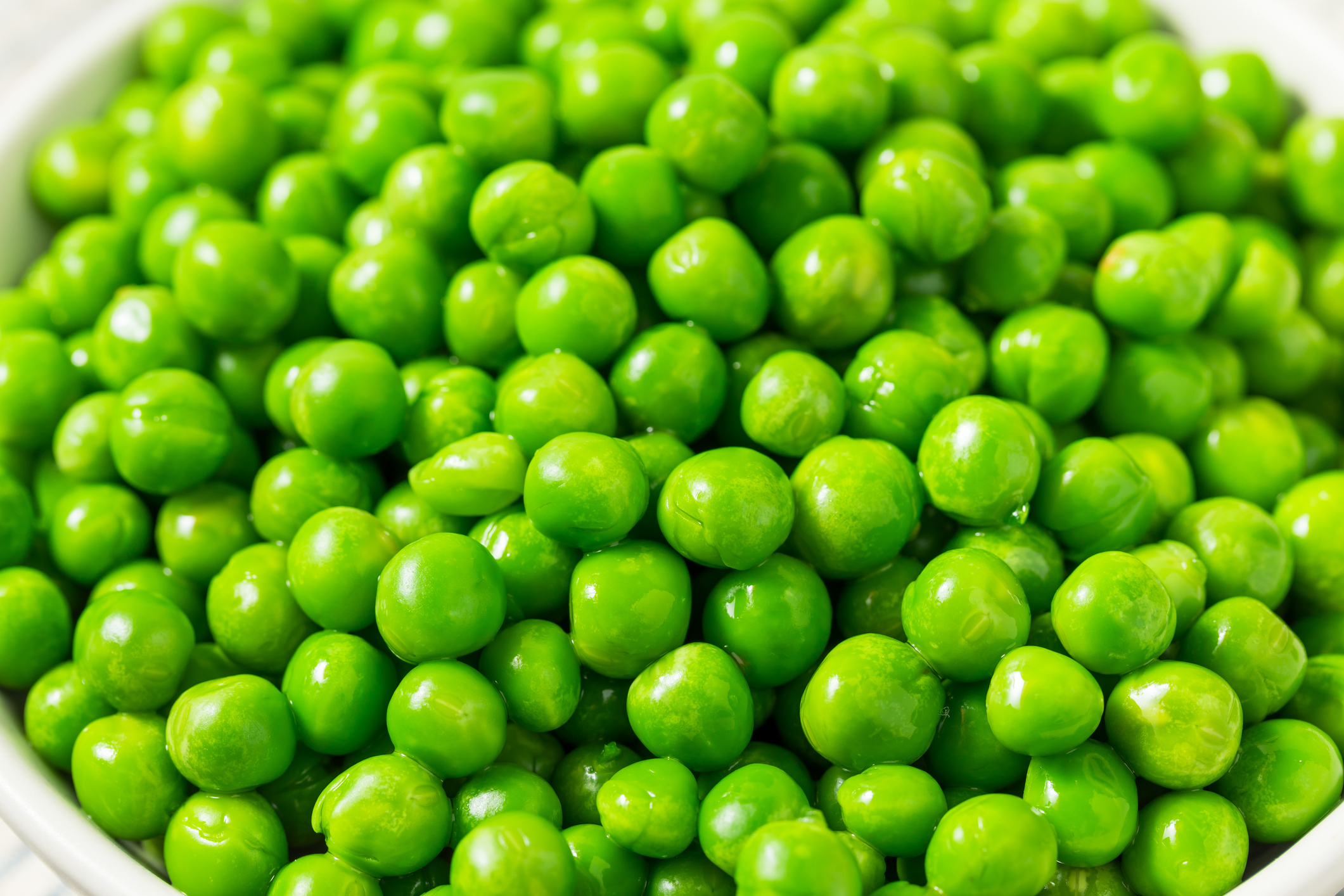
What are the health benefits of green peas? iStock-photo credit: bhofack2
One of the reasons why peas is a great weight loss vegetable because it is low in calories and high fiber. So, eating peas will fill you up without adding any extra calories to your daily calorie consumption.
Grean peas are also considered one of the best plant-based sources of protein. And eating any type of rich protein food, especially plant-based protein like peas, will help to fill you up. Peas is also a low glycemic food which is known to help regulate blood sugar levels.
The fiber in peas is great for the digestive system because of the beneficial bacteria it creates in the gut. The fiber in peas will always heighten positive gut health.
The fiber in it is considered insoluble fiber, and this means it doesn’t blend with water but functions as a bulking agent in your digestive tract. But soluble fiber is different because it absorbs water to create bulk which helps to influence diarrhea management. So that is the difference between insoluble and soluble fiber.
Research studies have shown that fiber in peas can lower total and bad cholesterol levels. Two of the most important anti-nutrients that are found in green peas is phytic acid and lectins. For some people not everybody the lectins in green peas have caused bloating.
Green peas contain flavonols, antioxidants, carotenoids, Vitamin C, antioxidants and this has all been shown in studies to reduce the risk of stroke, heart disease, etc.
The Bottom Line is the health benefits of green peas that contain antioxidants, carotenoids, flavonols which have been shown in numerous studies to reduce the risk of chronic health diseases such as heart disease, stroke, etc.
If you have any interest in trying any of our online diet and weight loss programs to help you shed body fat and achieve your best body, then click on the link below.
About Author- Obi Obadike
About Obi Obadike – Welcome to Obi Obadike | World Renowned Fitness Expert
Sharecare Names Top 10 Fittest Cities in America – Sharecare
References
- Moon J, Koh G. Clinical Evidence and Mechanisms of High-Protein Diet-Induced Weight Loss. J Obes Metab Syndr. 2020 Sep 30;29(3):166-173. doi: 10.7570/jomes20028. PMID: 32699189; PMCID: PMC7539343.
- Akhlaghi M. The role of dietary fibers in regulating appetite, an overview of mechanisms and weight consequences. Crit Rev Food Sci Nutr. 2024;64(10):3139-3150. doi: 10.1080/10408398.2022.2130160. Epub 2022 Oct 4. PMID: 36193993.
- Wu DT, Li WX, Wan JJ, Hu YC, Gan RY, Zou L. A Comprehensive Review of Pea (Pisum sativum): Chemical Composition, Processing, Health Benefits, and Food Applications. Foods. 2023 Jun 29;12(13):2527. doi: 10.3390/foods12132527. PMID: 37444265; PMCID: PMC10341148.
- Becerra-Tomás N, Papandreou C, Salas-Salvadó J. Legume Consumption and Cardiometabolic Health. Adv Nutr. 2019 Nov 1;10(Suppl_4):S437-S450. doi: 10.1093/advances/nmz003. PMID: 31728491; PMCID: PMC6855964.
- Ha V, Sievenpiper JL, de Souza RJ, Jayalath VH, Mirrahimi A, Agarwal A, Chiavaroli L, Mejia SB, Sacks FM, Di Buono M, Bernstein AM, Leiter LA, Kris-Etherton PM, Vuksan V, Bazinet RP, Josse RG, Beyene J, Kendall CW, Jenkins DJ. Effect of dietary pulse intake on established therapeutic lipid targets for cardiovascular risk reduction: a systematic review and meta-analysis of randomized controlled trials. CMAJ. 2014 May 13;186(8):E252-62. doi: 10.1503/cmaj.131727. Epub 2014 Apr 7. PMID: 24710915; PMCID: PMC4016088.
- Moser MA, Chun OK. Vitamin C and Heart Health: A Review Based on Findings from Epidemiologic Studies. Int J Mol Sci. 2016 Aug 12;17(8):1328. doi: 10.3390/ijms17081328. PMID: 27529239; PMCID: PMC5000725.
- Wang M, Tang R, Zhou R, Qian Y, Di D. The protective effect of serum carotenoids on cardiovascular disease: a cross-sectional study from the general US adult population. Front Nutr. 2023 Jul 12;10:1154239. doi: 10.3389/fnut.2023.1154239. PMID: 37502714; PMCID: PMC10368866.
- Popiolek-Kalisz J, Fornal E. The Impact of Flavonols on Cardiovascular Risk. Nutrients. 2022 May 9;14(9):1973. doi: 10.3390/nu14091973. PMID: 35565940; PMCID: PMC9101293.
- USDA- https://fdc.nal.usda.gov/food-details/170420/nutrients
- Vojdani A. Lectins, agglutinins, and their roles in autoimmune reactivities. Altern Ther Health Med. 2015;21 Suppl 1:46-51. PMID: 25599185.
- Thompson HJ. Improving Human Dietary Choices Through Understanding of the Tolerance and Toxicity of Pulse Crop Constituents. Curr Opin Food Sci. 2019 Dec;30:93-97. doi: 10.1016/j.cofs.2019.01.001. Epub 2019 Jan 11. PMID: 32864345; PMCID: PMC7449238.