How many calories are in an orange? A medium-size orange is between 60 to 73 calories. The nutritional breakdown of a medium orange is:
Carbohydrates- 15 grams
Fiber- 3 grams
Sugar- 12 grams
Protein- 1.3 grams
Fat- 0.2 grams.
Vitamin C- 92% of the Daily Value
Folate- 9% of the Daily Value
Calcium- 5% of the Daily Value
Potassium- 5% of the Daily Value
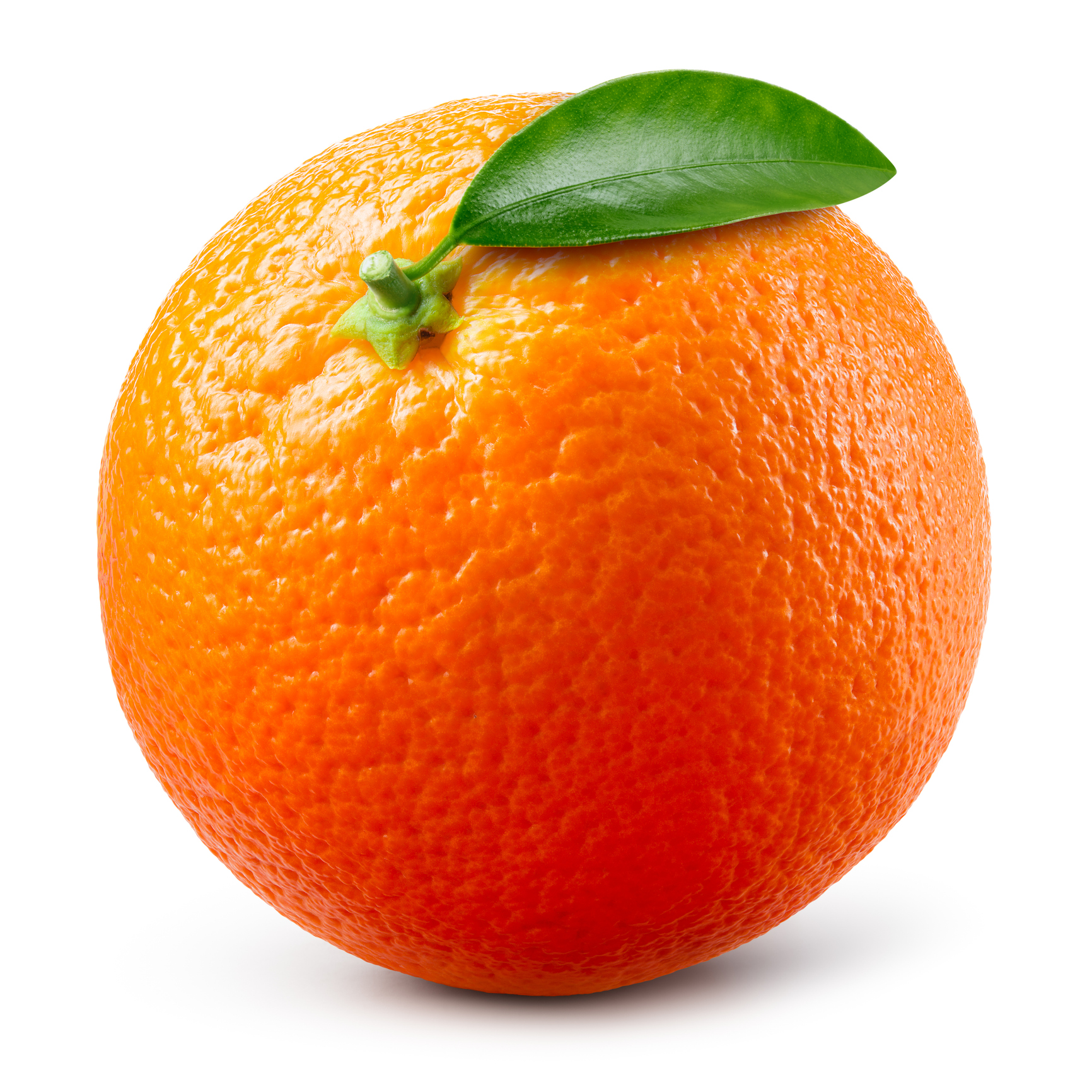
How many calories are in an orange? iStock-photo credit: ValentynVolkov
One of the most critical nutrients of an orange is Vitamin C. And Vitamin C is important for boosting your immune system. Folate in oranges plays a role in metabolism, fetal and placental development. The flavonoids in oranges contribute to the high antioxidant effect that oranges can give to you.
And the higher the antioxidant effect the more impact it gives to lowering the risk of chronic health diseases. Flavonoids and carotenoids in oranges help to promote a healthy heart and reduce the risk of heart disease.
There was a 2022 review study that showed 10 quality study and the results of this were the reduction of blood sugar, LDL bad cholesterol levels and the inflammatory marker CRP.
Studies show that diets high in citrus fruits may help reduce the risk of lung cancer and Type 2 diabetes. One study in 2021 revealed that in over 7000 Australian adults it found that moderate total fruit intake which included oranges and citrus fruits were 36% less likely to develop diabetes at 5 years. And that is compared to people with the lowest fruit intakes.
The fiber in oranges can help create and maintain healthy beneficial bacteria while influencing the immune system in a positive way. One of the main differences between orange juice and oranges is the fiber content. The fiber content is significantly lower in orange juice compared to oranges.
Some orange juices contain added sugars, and it is important if you are trying to maintain a healthy diet to keep added sugars consumption at a minimum.
The Bottom Line is a medium-size orange containing about 60 to 73 calories. One of the key ingredients that can help boost your antioxidant effect in your body is flavonoids and carotenoids.
If you have any interest in trying any of our online diet and weight loss programs to help you shed body fat and achieve your best body, then click on the link below.
About Author- Obi Obadike
About Obi Obadike – Welcome to Obi Obadike | World Renowned Fitness Expert
References
- Bisht S, Sina RE, Patel P. Vitamin C (Ascorbic Acid) [Updated 2026 Jun 19]. In: StatPearls [Internet]. Treasure Island (FL): StatPearls Publishing; 2026 Jan-. Available from: https://www.ncbi.nlm.nih.gov/books/NBK499877/
- Alhabeeb H, Sohouli MH, Lari A, Fatahi S, Shidfar F, Alomar O, Salem H, Al-Badawi IA, Abu-Zaid A. Impact of orange juice consumption on cardiovascular disease risk factors: a systematic review and meta-analysis of randomized-controlled trials. Crit Rev Food Sci Nutr. 2022;62(12):3389-3402. doi: 10.1080/10408398.2020.1865263. Epub 2020 Dec 22. PMID: 33350317.
- Wang J, Gao J, Xu HL, Qian Y, Xie L, Yu H, Qian BY. Citrus fruit intake and lung cancer risk: A meta-analysis of observational studies. Pharmacol Res. 2021 Apr;166:105430. doi: 10.1016/j.phrs.2021.105430. Epub 2021 Jan 30. PMID: 33529754.
- Bondonno NP, Davey RJ, Murray K, Radavelli-Bagatini S, Bondonno CP, Blekkenhorst LC, Sim M, Magliano DJ, Daly RM, Shaw JE, Lewis JR, Hodgson JM. Associations Between Fruit Intake and Risk of Diabetes in the AusDiab Cohort. J Clin Endocrinol Metab. 2021 Sep 27;106(10):e4097-e4108. doi: 10.1210/clinem/dgab335. PMID: 34076673; PMCID: PMC8475213.
- Iddir M, Brito A, Dingeo G, Fernandez Del Campo SS, Samouda H, La Frano MR, Bohn T. Strengthening the Immune System and Reducing Inflammation and Oxidative Stress through Diet and Nutrition: Considerations during the COVID-19 Crisis. Nutrients. 2020 May 27;12(6):1562. doi: 10.3390/nu12061562. PMID: 32471251; PMCID: PMC7352291.