How long does it take to get abs? The exact time it takes to get abs depends on how much body fat you have presently. For a man to see his abs he must be anywhere from 10 to 14% bodyfat. In fact, I’ve seen guys with abs as high as 14% body fat. With women they need to be anywhere from 14 to 18% bodyfat.
So, if you are about 3 to 4% body fat from that range it would take you roughly about 90 days. If we are using the average monthly amount of body fat loss which is 1% per month. And if you are doing everything right in terms of diet and exercise.
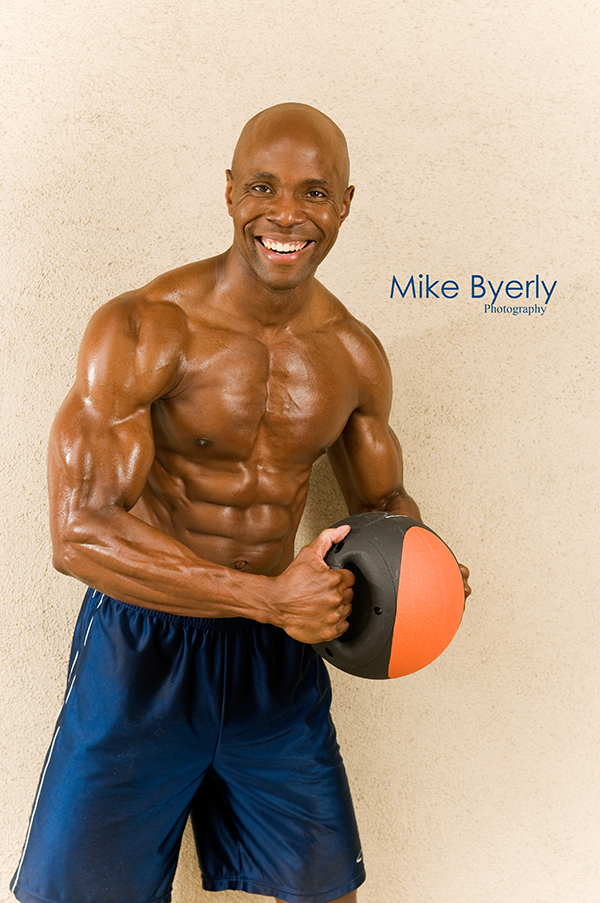
How long does it take to get abs?
To lose one pound per week or one percent bodyfat per month you need to cut 500 calories from your daily diet. If you are exercising you can do this by burning 250 calories per week as well as cutting your calories by 250.
Women naturally have more bodyfat than men and according to the journal of Obesity the average woman has about 40 percent bodyfat. And the average man has about 28 percent bodyfat. So, if you are a woman and you are at the average bodyfat of 40%. It would take you about a year and 10 months to see your abs which would get you at a body fat of 18%.
And if you are a man at 28% bodyfat to get to 14% it would take you about 14 months and this is using the 1% bodyfat per month loss average.
To be able to get abs you need to be on a rigorous exercise plan that would have you on a sensible cardiovascular and weight-training program. A good starting plan is to do weights about 3 to 4 days a week and cardio about 3 to 4 days a week.
With cardio you can implement a moderate walk which can help you burn 200 to 250 calories. If you are lifting weights for about 3 to 4 days a week and for about 40 to 45 minutes a day you should be able to burn at least 200 to 250 calories per day. So, between doing cardio and weight-training that is burning about 500 calories a day on average.
There is a saying that abs are made in the kitchen. And this means to see your abs you need to eat enough high-quality protein, carbs and high fiber foods that will give you enough nutrients that put you in a caloric deficit. Being in a caloric deficit means burning more calories than you are consuming.
There is a study that showed that overweight adolescents who did cardio and strength training for 30 minutes about 3 times a week for a year. They lost more bodyfat and waist circumference than those who just did aerobic exercise.
An analysis that was published in the Nutrition Reviews revealed that when trying to lose weight those who ate higher than the average amounts of protein 1.2 to 1.5 grams of protein per 2.2 pounds of bodyweight were able to preserve more lean muscle mass while improving body composition. And this is compared to those who ate average amounts of protein, (0.8 grams per 2.2 pounds of bodyweight).
And this comes out to 90 grams of protein if you are a 150-pound person. Some good protein foods are chicken, turkey, fish, beef, steak, etc. And some good fiber foods are oatmeal and brown rice. And fruits and vegetables such as broccoli, spinach, asparagus, apples, bananas, oranges, etc.
The Bottom Line is how long it takes to get abs is based on how much fat you have presently. An average monthly body fat loss is 1% per month. So, if you are a woman and you are at the average bodyfat of 40% it would take you about a year and 10 months.
If you are man and you are at an average bodyfat of 28% it would take you at least 14 months.
If you have any interest in trying any of our online diet and weight loss programs to help you shed body fat and achieve your best body, then click on the link below.
About Author- Obi Obadike
About Obi Obadike – Welcome to Obi Obadike | World Renowned Fitness Expert
References
- de Mello, M.T., de Piano, A., Carnier, J., Sanches, P.d.L., Corrêa, F.A., Tock, L., Ernandes, R.M.Y., Tufik, S. and Dâmaso, A.R. (2011), Long-Term Effects of Aerobic Plus Resistance Training on the Metabolic Syndrome and Adiponectinemia in Obese Adolescents. The Journal of Clinical Hypertension, 13: 343-350. https://doi.org/10.1111/j.1751-7176.2010.00388.x
- Boutcher SH. High-intensity intermittent exercise and fat loss. J Obes. 2011;2011:868305. doi: 10.1155/2011/868305. Epub 2010 Nov 24. PMID: 21113312; PMCID: PMC2991639.
- St-Onge MP. Are normal-weight Americans over-fat? Obesity (Silver Spring). 2010 Nov;18(11):2067-8. doi: 10.1038/oby.2010.103. PMID: 20978478; PMCID: PMC3837418.