How much protein in in salmon? There is about 22 to 25 grams of protein in a 3.5 oz of salmon. Salmon is a solid nutritional fish that has a reliable source of protein, healthy fat, essential vitamins and minerals. The nutritional value of a 3.5 ounce of Wild salmon is the following:
Calories- 182
Protein- 25.4 grams
Fat- 8.13 grams.
Vitamin B-12- 127% of the Daily Value
Vitamin B6- 56% of the Daily Value
Selenium- 85% of the Daily Value
Niacin- 63% of the Daily Value
Pantothenic Acid- 38% of the Daily Value
Thiamine- 23% of the Daily Value
Phosphorus- 21% of the Daily Value
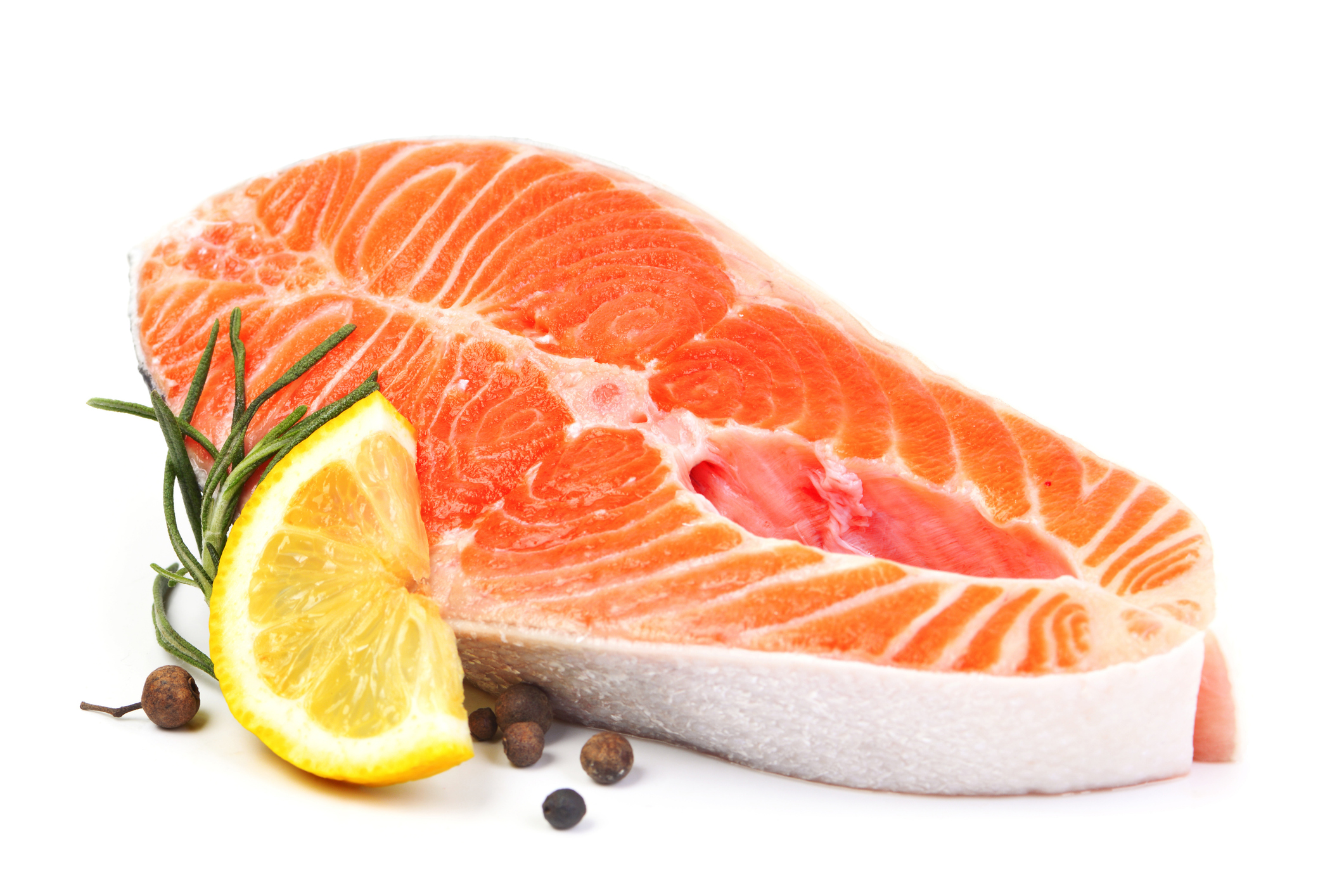
How much protein in in salmon? iStock-photo credit: Valeriy Pauk
Salmon is a reliable source of Omega 3 fatty acids which is an EPA and DHA. EPA stands for eicosapentaenoic acid and DHA stands for docosahexaenoic acid. Research studies have shown the health benefits of Omega 3 fatty acids are:
- Decreasing Inflammation
- Lowering blood pressure levels and the risk of cardiovascular disease.
- Improving cognitive stability and neurological development.
Protein is one of the most important macronutrients you can take, and it’s found in fish, chicken, turkey, eggs, beef, steak, etc. Protein is integral in building and maintaining lean muscle mass as well as improving bone health.
The United States Department Of Agriculture- USDA advise for most Adults to consume 1.2 to 1.6 grams of protein per Kilogram of bodyweight daily. And eating salmon daily will help serve your daily protein needs because it contains on average about 22 grams of protein per 3.5 ounce.
When consuming a high amount of Omega 3’s it will help to lower blood pressure levels. And because it is high in sodium that will help to regulate fluid balance. And the result of this is preventing excess water retention.
There was a 2023 analysis on 18 studies, and it showed that eating salmon regularly lowers the risk of cardiovascular diseases. Research studies have also shown that eating fatty fish is linked to lowering triglyceride markers and increasing the good cholesterol levels which is your HDL levels.
Salmon also has an important carotenoid antioxidant component called astaxanthin. Eating salmon can give you a strong protection against inflammation. Inflammation is one of the contributing factors when it comes to obtaining chronic health diseases such as cancer, cardiovascular disease, diabetes, etc.
Inflammation
Several studies showed that eating salmon and other types of fish has reduced several inflammation blood markers. A 2021 research study that had 4,105 people in it showed that the group that ate salmon had lower white blood cells which is extensively used a test to measure inflammation.
Eye Vision
There are nutrients in salmon that has shown to improve eye vision and that component is called astaxanthin. Studies have shown to reduce eye disorders such as cataracts, uveitis, etc.
The Bottom Line is there is about 22 grams of protein in 3.5 oz serving of Salmon. The protein in salmon is high and is ideal to help meet your daily protein needs.
If you have any interest in trying any of our online diet and weight loss programs to help you shed body fat and achieve your best body, then click on the link below.
About Author- Obi Obadike
About Obi Obadike – Welcome to Obi Obadike | World Renowned Fitness Expert
References
- Kavyani Z, Musazadeh V, Fathi S, Hossein Faghfouri A, Dehghan P, Sarmadi B. Efficacy of the omega-3 fatty acids supplementation on inflammatory biomarkers: An umbrella meta-analysis. Int Immunopharmacol. 2022 Oct;111:109104. doi: 10.1016/j.intimp.2022.109104. Epub 2022 Jul 30. PMID: 35914448.
- Liao J, Xiong Q, Yin Y, Ling Z, Chen S. The Effects of Fish Oil on Cardiovascular Diseases: Systematical Evaluation and Recent Advance. Front Cardiovasc Med. 2022 Jan 5;8:802306. doi: 10.3389/fcvm.2021.802306. PMID: 35071366; PMCID: PMC8767101.
- USDA- https://fdc.nal.usda.gov/food-details/175168/nutrients
- Ricci H, Gaeta M, Franchi C, Poli A, Battino M, Dolci A, Schmid D, Ricci C. Fish Intake in Relation to Fatal and Non-Fatal Cardiovascular Risk: A Systematic Review and Meta-Analysis of Cohort Studies. Nutrients. 2023 Oct 26;15(21):4539. doi: 10.3390/nu15214539. PMID: 37960192; PMCID: PMC10647504.
- Djuricic I, Calder PC. Beneficial Outcomes of Omega-6 and Omega-3 Polyunsaturated Fatty Acids on Human Health: An Update for 2021. Nutrients. 2021 Jul 15;13(7):2421. doi: 10.3390/nu13072421. PMID: 34371930; PMCID: PMC8308533.
- Tani S, Kawauchi K, Atsumi W, Matsuo R, Ashida T, Imatake K, Suzuki Y, Yagi T, Takahashi A, Matsumoto N, Okumura Y. Association among daily fish intake, white blood cell count, and healthy lifestyle behaviors in an apparently healthy Japanese population: implication for the anti-atherosclerotic effect of fish consumption. Heart Vessels. 2021 Jul;36(7):924-933. doi: 10.1007/s00380-020-01769-9. Epub 2021 Jan 7. PMID: 33411013.
- Giannaccare G, Pellegrini M, Senni C, Bernabei F, Scorcia V, Cicero AFG. Clinical Applications of Astaxanthin in the Treatment of Ocular Diseases: Emerging Insights. Mar Drugs. 2020 May 1;18(5):239. doi: 10.3390/md18050239. PMID: 32370045; PMCID: PMC7281326.