How to lose lower bellyfat? To lose lower belly fat it requires a combination of being on an effective diet and exercise program which puts you in a caloric deficit. And the result of this is burning more calories than you are consuming. There is no such thing as spot reduction meaning doing some silly abs exercise and then magically your belly fat goes away.
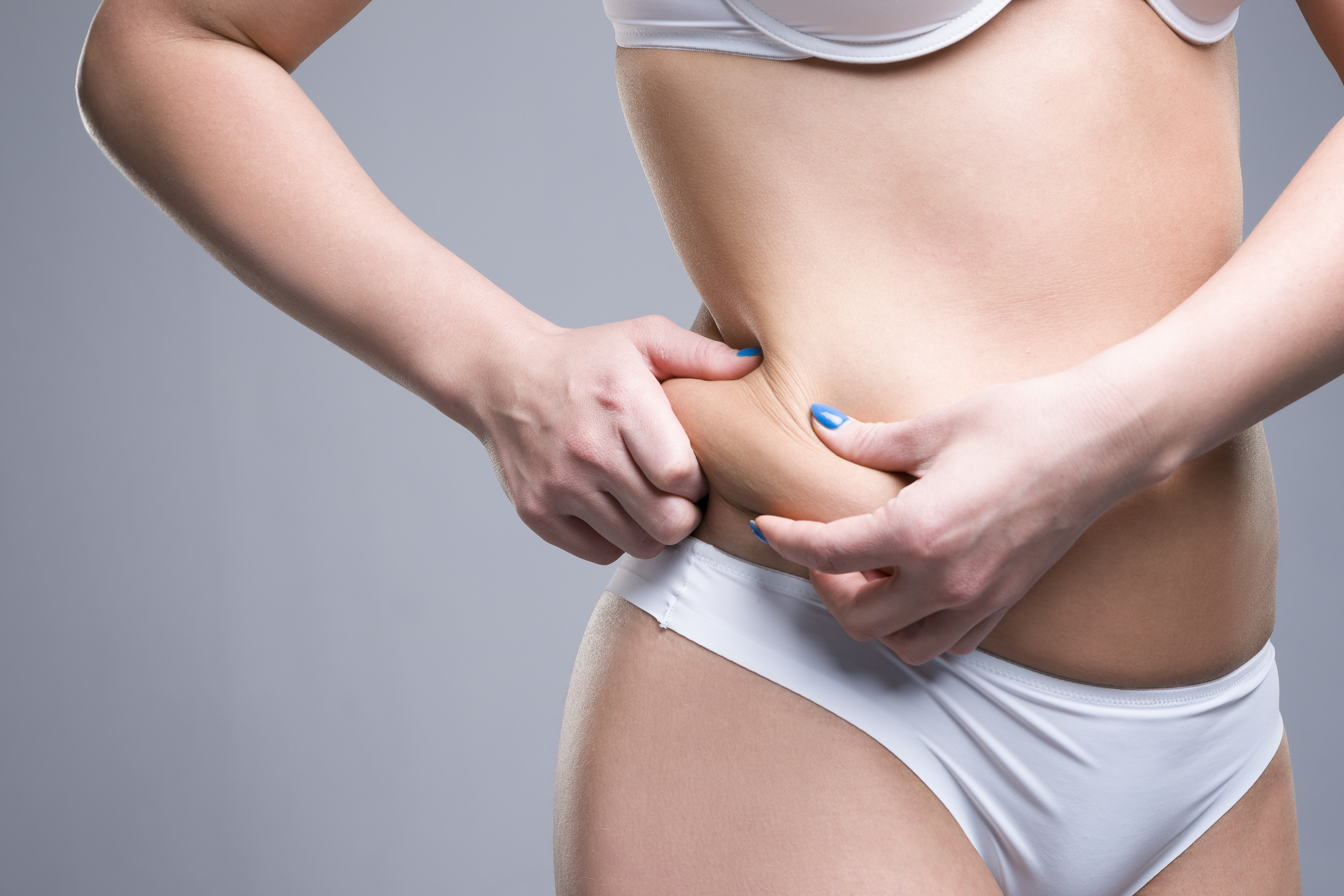
How to lose lower bellyfat? iStock-photo credit: Staras
Your diet should focus on unprocessed whole foods that are low in calories and high in nutrients. These foods will make you feel full and suppress your appetite. Some of those foods you should eat are vegetables and fruits.
As well as lean protein foods such as fish, turkey, lean beef, etc. Drinking up to 8 glasses of water per day and drinking a glass of water before you eat each meal will help to suppress your appetite and lose weight and bellyfat.
If most of your foods that you eat are soluble fiber foods this will help keep your calories while helping you stay in that caloric deficit.
Some good soluble fiber foods are:
• Fruits
• Vegetables
• Oats
• Barley
• Legumes
Protein Foods
Following a diet that is high protein is important in losing belly fat and this is because protein has the highest thermic effect. 25 to 30% of all protein you digest is burned through the digestion process. And the energy that is being used to burn during the digestion process helps to speed up your metabolism.
Protein foods also help to build and maintain lean muscle mass. The more lean muscle mass you have the faster your metabolism will be.
Your goal should be to have a protein food with every meal and some good protein foods to eat are the following:
• Fish
• Eggs
• Chicken
• Turkey
• Whey protein
• Beans
A research study revealed that those who ate more protein tend to have less abdominal fat than those who ate a lower protein diet.
Some of the things you want to stay away from that can make it difficult for you to lose belly fat are alcohol, stress and eating a lot of sugary foods.
Alcohol
There was a 2003 study that was done by more than 2000 people. And the results of that study showed that those who drank alcohol daily but averaged less than one drink per day. They had less body fat than those who drank less frequently. But they consumed more alcohol than they drank.
A 2023 research study links alcohol consumption to a significant increase of developing excess fat storage around the waistline. A high consumption of sugary foods is linked to various different chronic health diseases such as fatty liver disease, type 2 diabetes, heart disease and increased abdominal fat.
Dieting as we know is important but so is exercise. So many people focus just on cardio and don’t do weight-lifting. Or they focus on weight-lifting and don’t do cardio. Both exercise modalities should be done collectively together if you want to lower belly fat.
Cardio
Cardiovascular is one of the best ways to burn calories fast whether it be walking, swimming, jogging, gardening, walking up steps, etc. The intensity of cardiovascular can be moderate or high intensity. And the advantage of high intensity cardio is efficiency which allows you to cut your work out time in half. The higher the intensity the faster the calorie burn and the less time you have to do your cardio.
Weight-Lifting
Resistance training allows you to burn calories at the workout and after the workout because of the after-burn effect. And it helps to build and preserve muscle which speeds up your metabolism. Resistance training optimizes your metabolism, allowing you to burn calories while you are resting or sleeping.
A 2014 research study that was done on teenagers who were overweight showed that combining weight-training and cardio led to the greatest drop in visceral fat.
If you can consistently combine cardio and weight-training at least 3 days a week and up to 4 to 5 days a week it will be impactful when it comes to losing lower belly fat. You will drop a tremendous amount of body fat along with being on a structured diet program.
Sleep
Not getting enough sleep is tied to a higher risk of obesity and an increase in belly fat. A research study revealed that not getting enough sleep is linked to a higher risk of obesity and increased belly fat.
There was a 16-year study that followed more than 68,000 women. It found that those who slept less than 5 hours a day were significantly more likely to gain weight than those who slept 7 hours or more a night.
Stress
If you have high stress in your life, it can cause belly fat gain because of higher cortisol levels. Research studies show that higher cortisol levels heighten your appetite and increase abdominal fat storage.
Try as best to keep your stress levels at a minimal when you are trying to lose belly fat. If you constantly have a high amount of stress in your life it can cause a monkey wrench in your fat loss goals.
The Bottom Line is the best way to lower belly fat is to focus your diet on soluble fibers such as fruits, vegetables, whole grains, legumes, etc. And make sure to incorporate protein foods with every meal.
Also make sure that your diet and exercise program puts you in a caloric deficit. You can’t burn belly fat without being in a caloric deficit. A caloric deficit is burning more calories than you consume.
If you have any interest in trying any of our online diet and weight loss programs to help you shed body fat and achieve your best body, then click on the link below.
About Author- Obi Obadike
References
1) Patel SR, Malhotra A, White DP, Gottlieb DJ, Hu FB. Association between reduced sleep and weight gain in women. Am J Epidemiol. 2006 Nov 15;164(10):947-54. doi: 10.1093/aje/kwj280. Epub 2006 Aug 16. PMID: 16914506; PMCID: PMC3496783.
2) Yao F, Ma J, Qin P, Tu X, Li X, Tang X. Age and Sex Differences in the Association of Sleep Duration and Overweight/Obesity among Chinese Participants Age above 45 Years: A Cohort Study. J Nutr Health Aging. 2022;26(7):714-722. doi: 10.1007/s12603-022-1823-7. PMID: 35842762; PMCID: PMC12876614.
3) Cho KH, Cho EH, Hur J, Shin D. Association of Sleep Duration and Obesity According to Gender and Age in Korean Adults: Results from the Korea National Health and Nutrition Examination Survey 2007-2015. J Korean Med Sci. 2018 Dec 17;33(53):e345. doi: 10.3346/jkms.2018.33.e345. PMID: 30595686; PMCID: PMC6306326.
4) Dâmaso AR, da Silveira Campos RM, Caranti DA, de Piano A, Fisberg M, Foschini D, de Lima Sanches P, Tock L, Lederman HM, Tufik S, de Mello MT. Aerobic plus resistance training was more effective in improving the visceral adiposity, metabolic profile and inflammatory markers than aerobic training in obese adolescents. J Sports Sci. 2014;32(15):1435-45. doi: 10.1080/02640414.2014.900692. Epub 2014 Apr 14. PMID: 24730354.
5) Moon J, Koh G. Clinical Evidence and Mechanisms of High-Protein Diet-Induced Weight Loss. J Obes Metab Syndr. 2020 Sep 30;29(3):166-173. doi: 10.7570/jomes20028. PMID: 32699189; PMCID: PMC7539343.
6) Butler JL, Gordon-Larsen P, Steffen LM, Shikany JM, Jacobs DR Jr, Popkin BM, Poti JM. Associations of 5-year changes in alcoholic beverage intake with 5-year changes in waist circumference and BMI in the Coronary Artery Risk Development in Young Adults (CARDIA) study. PLoS One. 2023 Mar 8;18(3):e0281722. doi: 10.1371/journal.pone.0281722. PMID: 36888592; PMCID: PMC9994756.
7) Daley SF, Shreenath AP. The Role of Dietary Fiber in Health Promotion and Disease Prevention: A Practical Guide for Clinicians. [Updated 2025 Dec 1]. In: StatPearls [Internet]. Treasure Island (FL): StatPearls Publishing; 2026 Jan-. Available from: https://www.ncbi.nlm.nih.gov/books/NBK559033/