What are Macros? Macronutrients are the three nutrients your body needs to function properly which is protein, carbs and fats. And you want those to be balanced in terms of how much you are consuming to optimize your functionality.
Micronutrients are different than Macronutrients because it is vitamins and minerals and a good example of that is Vitamin and Zinc.
When talking about carbohydrates they are broken down in three categories which is sugar, starches and fiber.
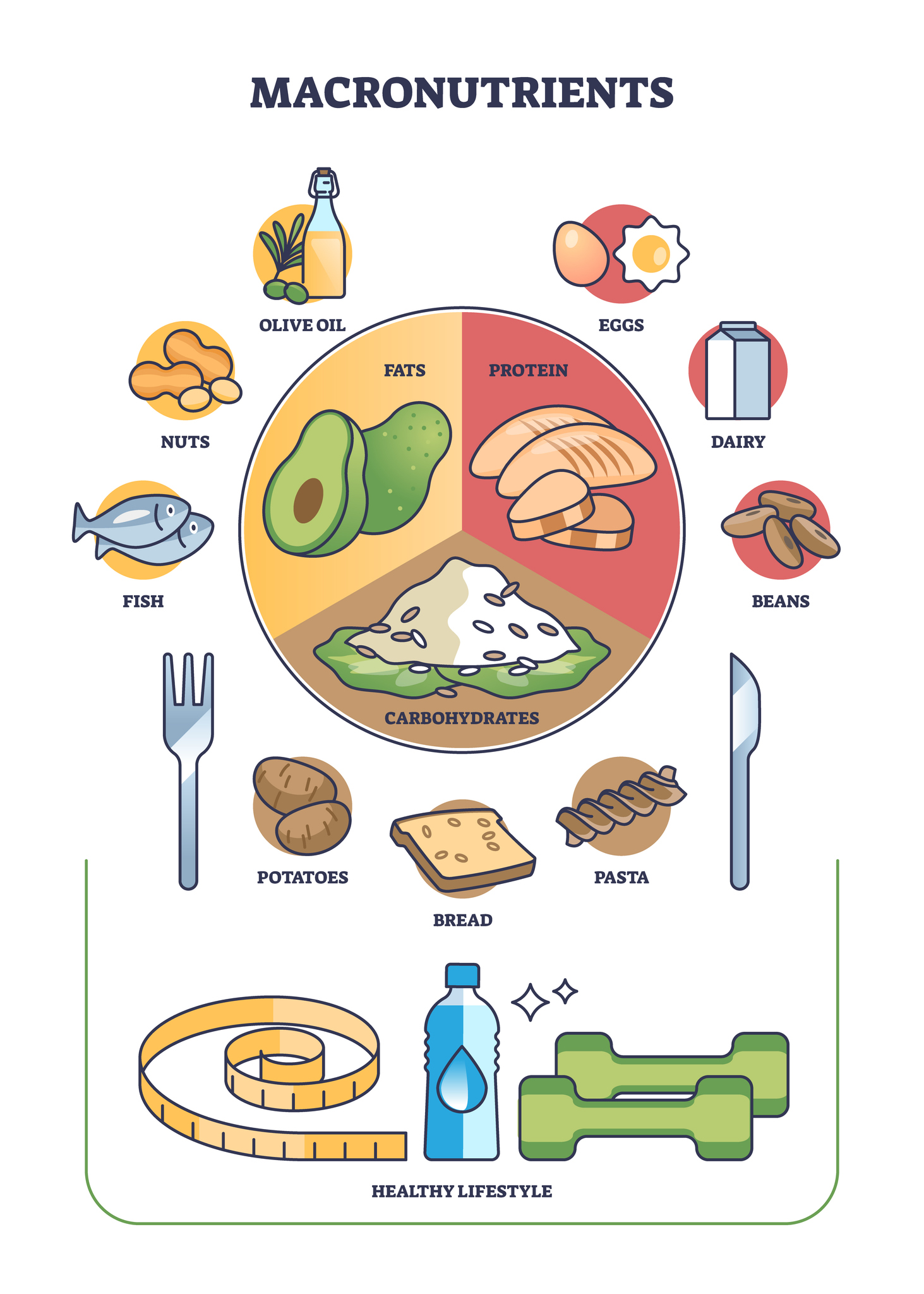
What are Macros? iStock-Photo Credit: Vectormine
Fiber
Fiber is a complex carb which can be find out in fruits, vegetables and whole grains. Fiber will help to fill you up and regulate your blood sugar levels. Most people don’t know that fiber is a complex carb that your body can’t digest.
Starches
This is also a complex carb which is found in corn, potatoes, oats, grains, etc.
Sugar
This is a simple carb that is naturally found in fruits, vegetables, dairy, etc. It also can provide quick energy to the body which can be used for any strenuous physical activity.
One of the foods that contain more than one type of carbohydrate is a banana. A banana has three forms of carbs.
Protein
The second important macronutrient is protein which is essential for building muscle, bone, blood, skin, etc. Some of those food sources are chicken, turkey, fish, beef, eggs, etc.
Some of the processed meats you want to stay away from is hotdogs, salami, bacon, beef jerky, etc. These types of meats are linked to high cholesterol.
Fats
Have you ever heard of the saying that not all fats are created equal? There is this is myth that you must avoid all fats and that is not true. You just want to make sure you are consuming the right fats.
Trans Fats has no health benefits at all, and this heavily used in processed foods and fried foods.
Saturated Fats is found in animal proteins like red meat, sausage, cheese, etc. Research studies reveal that heavy consumption of this is linked to a higher risk of heart disease. It is advisable to limit your intake of this to less than 10% of your daily calories.
Unsaturated Fats are the best fats for your heart and overall health. These fats are found in nuts and avocados, oily fish such as salmon, sardines, tuna, etc.
One of the best ways to determine your macronutrients needs is based on several things such as:
- Age
- Physical Activity Levels
- Current Health Status
- Genetics
There is not one macro plan that fits all and when creating a macronutrient diet it always come down to your specific fitness and health goals.
A good recommended daily breakdown of your macronutrient goals is:
10 to 35% of your calories comes from protein.
20 to 35% of your calories comes from fats while limiting your trans and saturated fats.
45 to 65% of your calories comes from carbohydrates.
Why would you adjust your macros based on your fitness goals? Because if you are an endurance runner you would need to consume more carbohydrates. And this is because of the strenuous running, and a higher amount of carbs would help to sustain that effort. If you need to build muscle, you will need to consume more protein.
To determine how many calories that should come from each macronutrient ratio. Multiply the number of calories by the percentage of each macronutrient.
This is a good example using these numbers below as a macronutrient template.
Calories from carbohydrates- 2000* 0.5= 1000 calories
Calories from protein- 2000* 0.25= 500 calories
Calories from fats- 2000* 0.25= 500 calories
If we are using this as macronutrient percentage template for the average fitness enthusiast:
50%- Carbohydrates
25%- Protein
25%- Fats
The Bottom Line is macros is essential in helping you achieve your fitness goals whether it be losing fat or gain lean muscle mass. Tracking daily macros isn’t for everybody as it can be nauseating having to log all your foods in a diary or food journal.
If you have any interest in trying any of our online diet and weight loss programs to help you shed body fat and achieve your best body, then click on the link below.
About Author- Obi Obadike
About Obi Obadike – Welcome to Obi Obadike | World Renowned Fitness Expert
References
- Jäger R, Kerksick CM, Campbell BI, Cribb PJ, Wells SD, Skwiat TM, Purpura M, Ziegenfuss TN, Ferrando AA, Arent SM, Smith-Ryan AE, Stout JR, Arciero PJ, Ormsbee MJ, Taylor LW, Wilborn CD, Kalman DS, Kreider RB, Willoughby DS, Hoffman JR, Krzykowski JL, Antonio J. International Society of Sports Nutrition Position Stand: protein and exercise. J Int Soc Sports Nutr. 2017 Jun 20;14:20. doi: 10.1186/s12970-017-0177-8. PMID: 28642676; PMCID: PMC5477153.
- Gardner CD, Kim S, Bersamin A, Dopler-Nelson M, Otten J, Oelrich B, Cherin R. Micronutrient quality of weight-loss diets that focus on macronutrients: results from the A TO Z study. Am J Clin Nutr. 2010 Aug;92(2):304-12. doi: 10.3945/ajcn.2010.29468. Epub 2010 Jun 23. PMID: 20573800; PMCID: PMC2904033.
- Simpson CC, Mazzeo SE. Calorie counting and fitness tracking technology: Associations with eating disorder symptomatology. Eat Behav. 2017 Aug;26:89-92. doi: 10.1016/j.eatbeh.2017.02.002. Epub 2017 Feb 9. PMID: 28214452.