Is Cabbage good for you? Cabbage is exceptionally good for you because it is a low calorie and nutrient dense cruciferous vegetable. And it carries Vitamin K, Vitamin C and fiber. The health benefits of this are it promotes positive digestive health as well as chronic inflammation.
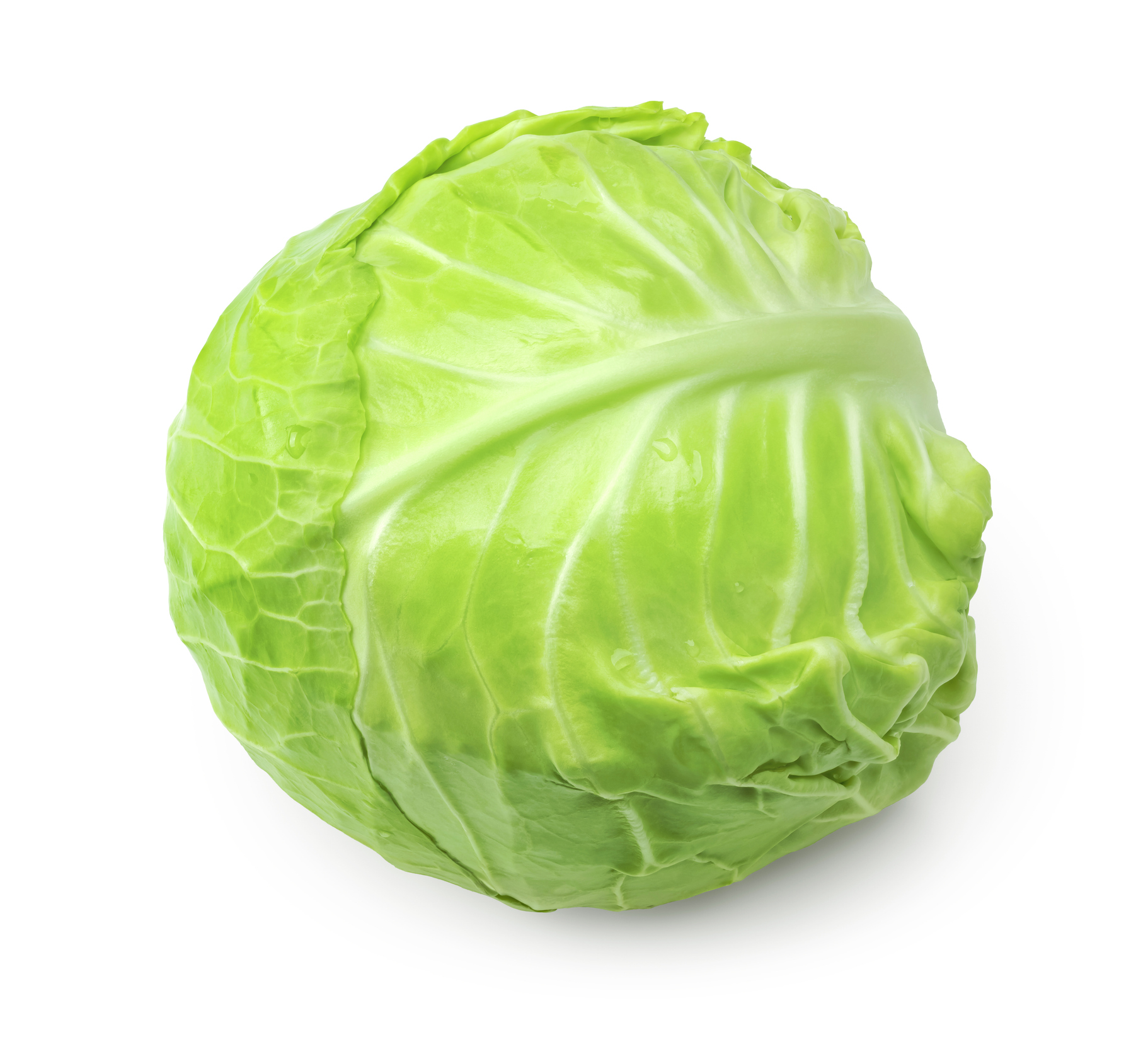
Is Cabbage good for you? iStock- photo credit: Dmytio
The nutrient health profile of 1 cup of raw cabbage is the following:
- Calories- 22
- Protein- 1 gram
- Fiber- 2 grams
- Vitamin K- 56% of the Daily Value
- Vitamin C- 36% of the Daily Value
- Folate- 10% of the Daily Value
- Manganese- 6% of the Daily Value
- Vitamin B6- 6% of the Daily Value
- Calcium- 3% of the Daily Value
- Potassium- 3% of the Daily Value
- Magnesium- 3% of the Daily Value
Cabbage contains a lot of powerful antioxidants such as polyphenols and sulfur compounds which can help reduce the risk of a lot of chronic health diseases. Why antioxidants are so important is because they protect the body from damage of free radicals. When free radicals have too much unstable electrons it can cause damage to your cells.
The antioxidants in cabbage have shown to reduce inflammation in the body. In fact, a 2014 study of young adults from the ages of 20 to 40 ate cruciferous vegetables and the result was a reduction of inflammation in their blood markers.
Another study in about 1000 females showed that those who ate the highest amount of cruciferous vegetables vs the one that didn’t saw less inflammation.
The insoluble fiber from eating cabbage or any cruciferous vegetables will improve the health of your digestive system. Why? Because it adds bulks to your stool which helps to promote normal bowel movements.
Red cabbage contains a powerful compound called anthocyanins. Studies have shown that eating foods rich in this compound can reduce the risk of heart disease. There was a 2013 research study that was done on 93,600 women and it found that those who ate anthocyanin rich foods had a lower risk of heart attack.
Studies have shown that increasing your dietary intake of anthocyanins can reduce blood pressure and cholesterol levels.
Cabbage is considered to have a reliable source of soluble fiber. In fact, 40% of the fiber found in cabbage is soluble.
The Bottom Line is Cabbage is a great healthy vegetable because it can improve your digestive system, reduce inflammation. And reduce the risk of chronic health diseases because of the number of potent antioxidants and compounds in it.
If you have any interest in trying any of our online diet and weight loss programs to help you shed body fat and achieve your best body, then click on the link below.
About Author- Obi Obadike
About Obi Obadike – Welcome to Obi Obadike | World Renowned Fitness Expert
Sharecare Names Top 10 Fittest Cities in America – Sharecare
References
- https://fdc.nal.usda.gov/food-details/169975/nutrients
- Enkhmaa B, Surampudi P, Anuurad E, et al. Lifestyle Changes: Effect of Diet, Exercise, Functional Food, and Obesity Treatment on Lipids and Lipoproteins. [Updated 2018 Sep 11]. In: Feingold KR, Adler RA, Ahmed SF, et al., editors. Endotext [Internet]. South Dartmouth (MA): MDText.com, Inc.; 2000-. Table 8. [Fiber Content of Selected Vegetables*]. Available from: https://www.ncbi.nlm.nih.gov/books/NBK326737/table/lipids_lifestyle-changes-lipids-and-lipoproteins.T._7/
- Vendrame S, Klimis-Zacas D. Potential Factors Influencing the Effects of Anthocyanins on Blood Pressure Regulation in Humans: A Review. Nutrients. 2019 Jun 25;11(6):1431. doi: 10.3390/nu11061431. PMID: 31242638; PMCID: PMC6628116.
- Xu L, Tian Z, Chen H, Zhao Y and Yang Y (2021) Anthocyanins, Anthocyanin-Rich Berries, and Cardiovascular Risks: Systematic Review and Meta-Analysis of 44 Randomized Controlled Trials and 15 Prospective Cohort Studies. Front. Nutr. 8:747884. doi: 10.3389/fnut.2021.747884
- Cassidy A, Mukamal KJ, Liu L, Franz M, Eliassen AH, Rimm EB. High anthocyanin intake is associated with a reduced risk of myocardial infarction in young and middle-aged women. Circulation. 2013 Jan 15;127(2):188-96. doi: 10.1161/CIRCULATIONAHA.112.122408. PMID: 23319811; PMCID: PMC3762447.
- Ockermann P, Headley L, Lizio R, Hansmann J. A Review of the Properties of Anthocyanins and Their Influence on Factors Affecting Cardiometabolic and Cognitive Health. Nutrients. 2021 Aug 18;13(8):2831. doi: 10.3390/nu13082831. PMID: 34444991; PMCID: PMC8399873.
- Ioniță-Mîndrican CB, Ziani K, Mititelu M, Oprea E, Neacșu SM, Moroșan E, Dumitrescu DE, Roșca AC, Drăgănescu D, Negrei C. Therapeutic Benefits and Dietary Restrictions of Fiber Intake: A State of the Art Review. Nutrients. 2022 Jun 26;14(13):2641. doi: 10.3390/nu14132641. PMID: 35807822; PMCID: PMC9268622.
- Navarro SL, Schwarz Y, Song X, Wang CY, Chen C, Trudo SP, Kristal AR, Kratz M, Eaton DL, Lampe JW. Cruciferous vegetables have variable effects on biomarkers of systemic inflammation in a randomized controlled trial in healthy young adults. J Nutr. 2014 Nov;144(11):1850-7. doi: 10.3945/jn.114.197434. Epub 2014 Aug 27. PMID: 25165394; PMCID: PMC4195422.
- Jin N, Jin L, Luo S, Tang Z, Liu Z, Wei S, Liu F, Zhao X, Yu J, Zhong Y. Comprehensive Evaluation of Amino Acids and Polyphenols in 69 Varieties of Green Cabbage (Brassica oleracea var. capitataL.) Based on Multivariate Statistical Analysis. Molecules. 2021 Sep 3;26(17):5355. doi: 10.3390/molecules26175355. PMID: 34500788; PMCID: PMC8434452.